
Davos field guide
Three hundred people paid for their Davos SECURITY badges.
None of them got through the door DUE TO AN EVENT PLANNER BLUNDER (NOT MINE).
The Davos Field Guide:
How to host an event during the World Economic Forum.
46 pages. The 2027 rules, the real calendar, the actual budgets. $79.
Davos is not difficult because it is remote or expensive, although it is both. It is difficult because four separate authorities control different parts of your event, none of them coordinate on your behalf, every deadline falls months before anyone is ready, and almost everything you buy is non-refundable from the moment you buy it.
This is the working guide to operating inside that system.
It assumes you are good at your job and have never produced in this particular town. Fifteen chapters and seven appendices covering what the rules actually are, when things are genuinely due, what the money really looks like, and what the place is physically like to work in, written for the 2027 Annual Meeting, 18–22 January.
It includes the things nobody tells you until it is too late. That secure-zone badges are police accreditations, not registrations, binding, non-refundable, charged in full, with no way to check status until your guest is standing at the desk. That from 2027 the town has capped temporary projects at 125 and now scores applications rather than queuing them, which makes your paperwork history a competitive asset. That crew accommodation, which costs CHF 850 a night in February, has gone for CHF 5,600 during Forum week. That a restaurant serving your closed group is still a restaurant, but a restaurant with your logo and a check-in desk is a permitted project, and that single distinction decides whether you are inside a system that has already closed for the year.
You also get the templates: a printable deadline checklist, the badge tracker fields that would have saved those three hundred people, the guest information sheet to send at RSVP, and the nine questions to ask any Davos partner before you sign.
$79. Less than dinner for one guest. It exists so that a clerical error in December does not cost your client a quarter of a million francs and their entire week.

The Davos Field Guide: 46 pages on what hosting here actually takes. The 2027 rule changes, every deadline, four sample budgets, and the venue map. Written for planners.
missed august 15th application deadline?
Then read Chapter 15 first. Missing it costs you one format out of four: temporary builds and shopfront conversions. It does not cost you hotel function space, private residences, private dining, delegation programmes, or people. You have not lost Davos. You have lost the most expensive way to do Davos, in the year the town decided to ration it.
Chapter 15 lists the seven formats still bookable for 2027 and how to price them.
WHAT’S INSIDE
15 chapters
How Davos actually works: the four authorities, what each one can do to you, and the four tiers of access. Buying the wrong tier is where most wasted Davos budget goes.
What changed for 2027: the 125-project cap by zone, scored applications, one project per end-user, the death of the December sponsorship sale, and why property owners now ask for references.
The master calendar: every hard deadline from July 2026 to the week itself, and what happens if you miss each one.
Choosing your format: four formats, three of which sit entirely outside the permit system, and the five questions that decide between them.
The map: what an address actually means, which part of town is used for what, and the walking times that wreck run-of-shows.
Badges, stickers and accreditation: what each credential does and does not do, the rules that break planners, and an eight-step submission process that cannot fail.
Sample budgets: real ranges in Swiss francs for the private dinner, the hotel activation, the full house takeover, and the per-delegate model.
The line items nobody budgets: crew accommodation, Swiss work notifications, transport, insurance, and your own time.
On the ground: the security environment, build-up windows, vehicle stickers, weather, altitude.
Guests and communications: invitation architecture in tiers, the 19-day invitation sprint, and what to tell guests at each stage.
Run of week: the character of each of the five days, and where the value actually sits.
Choosing partners: the nine questions to ask before you sign, and the red flags.
Did it work? What to measure, what not to measure, and the debrief that compounds.
If you missed 15 August: what is still available and why your client may end up better off.
7 appendices: deadline checklist, badge tracker fields, guest information sheet, packing guidance, and where to verify every figure against the current official sources.
The Davos Field Guide: 46 pages on what hosting here actually takes. The 2027 rule changes, every deadline, four sample budgets, and the venue map. Written for planners.
Who is it for?
Written for meeting and event professionals who are planning, quoting, or being asked about an event in Davos during the World Economic Forum. It assumes competence and supplies only what is specific to this town.
Also useful if you are a brand, foundation or family office deciding whether a Davos presence is worth it — Chapter 8 will tell you what it costs before anyone quotes you, and Chapter 5 will tell you whether you need the format you are being sold.
Not for you if you want inspiration, case studies or a look at what other people built. This is a manual.
MEET THE AUTHOR
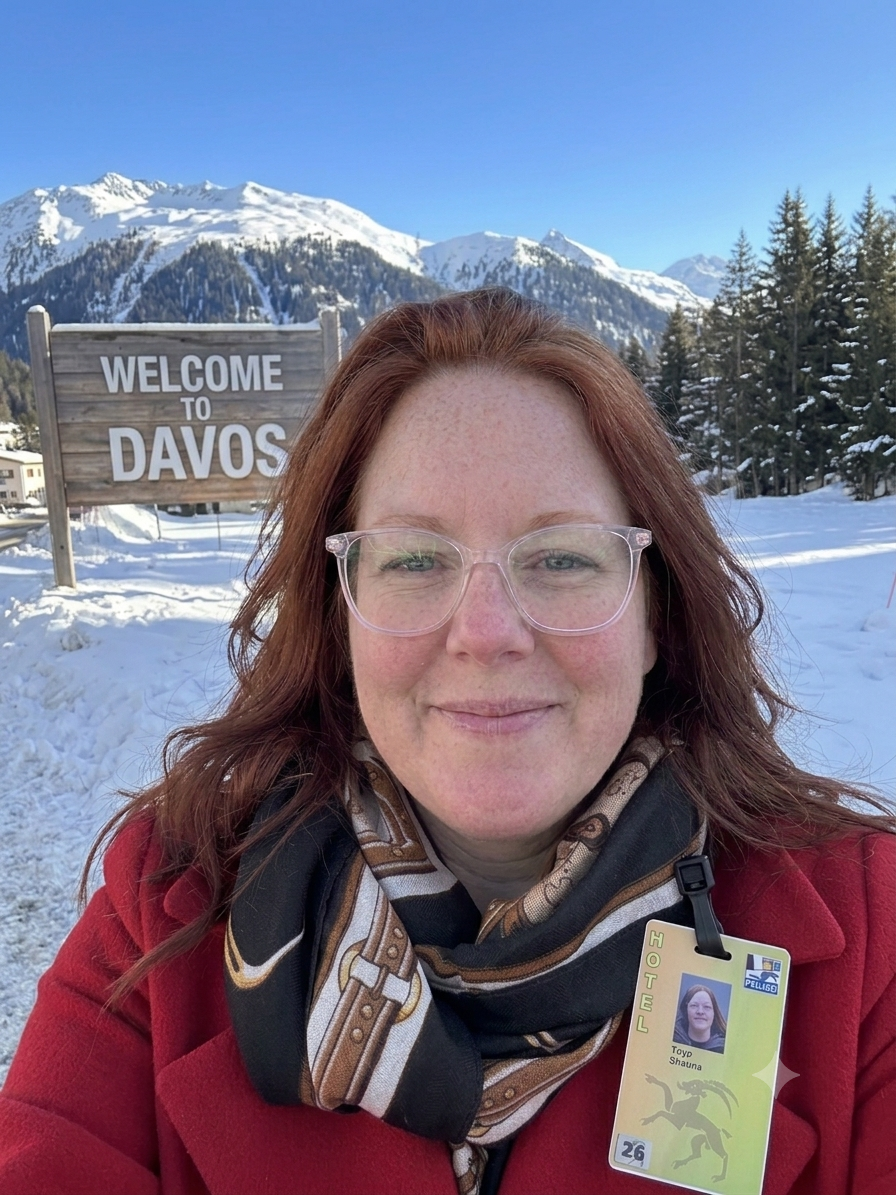
SHAUNA ARNOTT, Founder, mobi events
I run Mobi Events. We produce private events during the world's anchor weeks, and Davos is the one that taught me the most.
I have delivered events there across multiple editions of the Annual Meeting, for clients from all over the world, on budgets ranging from $75,000 to $2 million. That range matters, because the lessons do not scale the way people expect: the things that ruin a two-million-franc house are usually the same things that ruin a private dinner for twenty-five, and both come down to paperwork filed months earlier by someone you have never met.
Davos is a genuinely difficult place to operate. Eleven thousand residents host one of the densest gatherings on earth for five days. There are layers of security, several separate authorising authorities that do not talk to each other, deadlines that fall in the summer for an event in January, and a market of intermediaries in which the excellent and the catastrophic produce identical proposals. The difference between them only becomes visible in January, when the money is gone and the deadline is closed.
Last January I watched roughly three hundred people who had paid for secure-zone badges get turned away, one by one, at the police station. My guests got in — not because I am cleverer, but because I was working with a team I already knew and trusted. That is the thesis of this guide, and everything in it exists to keep you on the right side of that line.
I wrote it because there is no manual for this, and the people who know how the week works have never had much reason to write one down.
Shauna Arnott